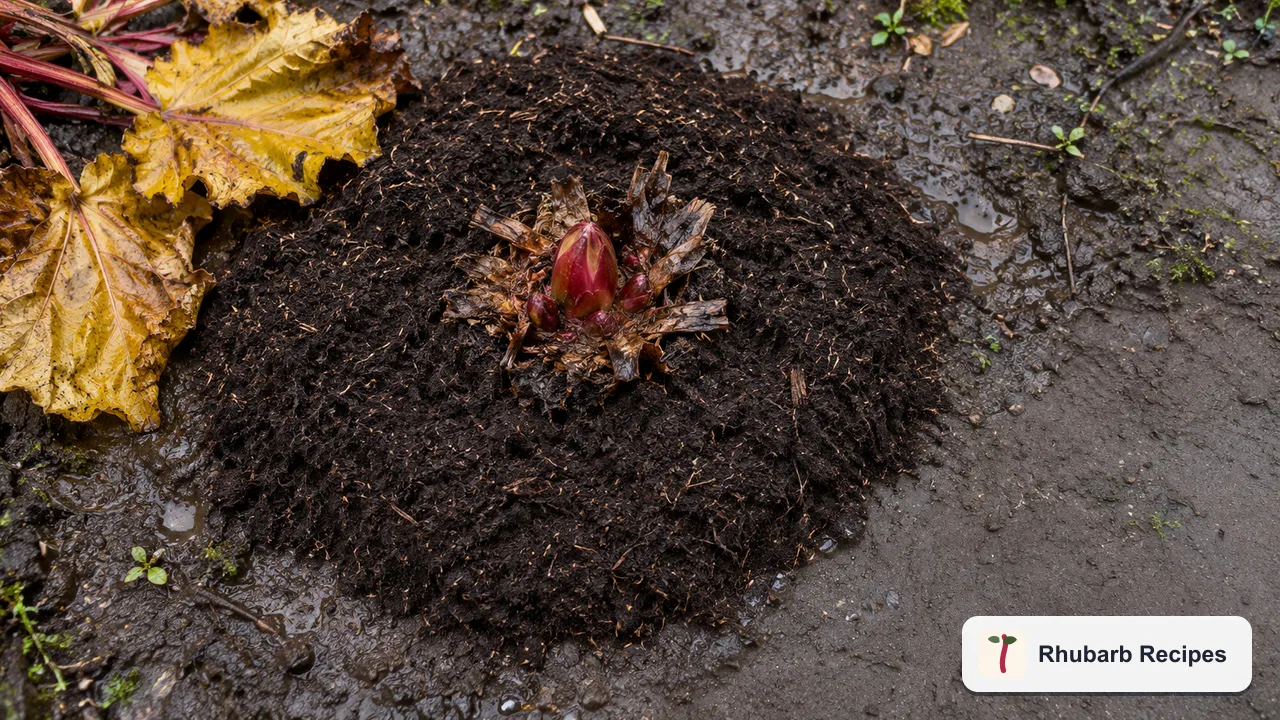
Over winter a rhubarb plant needs three things from you: a ring of mulch around the crown (not on top of it), soil that does not stay waterlogged, and a bit of protection for the first shoots if a hard frost is forecast in late winter. Do those and leave the rest to the plant. It is one of the toughest crops in a British garden and actually needs a cold winter to crop well.
Leave the old leaves where they fall, for now
By November the big leaves have yellowed and collapsed into a slimy heap. There is no hurry to tidy them. They give the crown a little cover in the first cold snaps, and they rot down on their own. When you come to mulch, pull them aside and put them on the compost heap; rhubarb leaves are poisonous to eat, but they compost perfectly safely.
Cut off any remaining flower stalks at the base too. A rhubarb that flowered in summer has spent energy that would otherwise have gone into the roots.
Mulching: where and how thick
Mulch is the most useful thing you can give a rhubarb plant all year. It feeds the soil, keeps moisture in during dry springs, and suppresses weeds around a crown that hates competition.
The RHS’s general advice on mulching is a layer of at least 5 cm and ideally 7.5 cm, spread over moist soil and never over frozen ground. Good materials are well-rotted manure, garden compost or leaf mould. Its specific rhubarb guidance suggests a layer about 7 cm deep of well-rotted organic matter each spring, kept off the crown itself to prevent rot.
Many growers put a first layer on in late autumn or early winter, while the soil is still soft, and top it up in spring. That is what we do. The key detail is the same either way:
Use manure that really is well rotted: dark, crumbly and with no strong smell. Fresh manure can scorch emerging shoots.
Waterlogging: the real winter danger
Cold does rhubarb no harm. Sitting wet does. The RHS lists rot among the main problems and links it to damp or waterlogged conditions, advising that any die-back be cut out promptly.
Walk round your plants after a week of heavy rain. If water is pooling around the crown, act:
- Scrape away soggy mulch and debris from directly over the crown.
- Dig a shallow channel to lead surface water away, if the slope allows.
- Avoid walking on the wet soil around the plant; compaction makes drainage worse.
- Make a note to lift and replant on a raised bed or mound next autumn if it happens every winter.
Spotting rot early
A healthy dormant crown is firm, with plump buds. If you notice buds that are soft, brown or collapsing, or if the centre of the crown smells sour and gives under your thumb, rot has set in. Cut back to firm, clean tissue with a sharp knife and let the wound dry. If most of the crown is affected, it is better to dig it out, salvage any sound outer pieces with a bud, and replant those in a different, better-drained spot. Our guide to dividing a rhubarb clump shows how to pick out the good sections.
Do not compost a badly rotted crown. Bag it up or put it in the council green waste bin instead.
Early shoots and late frost
In a mild winter the first pink buds can open in February, and a sharp frost a few weeks later can blacken them. The RHS suggests covering emerging shoots with straw or biodegradable fleece when freezing temperatures are forecast. Take the cover off again when the cold has passed so the shoots get light and air.
Frost-damaged stalks often split or ooze a sticky sap. The RHS links split stalks to erratic growing conditions or late frosts. They are unsightly rather than dangerous: pull and compost them, and the plant will send up replacements.
Snow, by contrast, is no problem. It insulates the crown and melts into the soil slowly.
Slugs come out early too
On mild, damp nights in late winter, slugs will find the first shoots. Clearing debris from around the crown, as you do when mulching, removes their daytime hiding places. A torchlit hunt on a wet evening in February is surprisingly effective.
A short winter calendar
- November. Remove dead leaves and flower stalks; weed around the crown; first ring of mulch on moist soil. Good month for planting new crowns and dividing old ones.
- December and January. Check drainage after heavy rain. Cover one strong crown if you want early forced stalks.
- February. Watch for emerging buds; have fleece or straw ready for frost. Start slug patrols.
- March. Top up the mulch ring as the soil warms. Remove any frost covers for good once nights are milder.
What not to do
If the plant went in this year, our notes on growing from a crown cover its first season. Do not feed with a high-nitrogen fertiliser in winter; the plant is dormant and cannot use it. Do not dig deeply around the crown, which damages the roots. And do not pull any stalks from a crown you are not forcing until spring proper; our picking calendar has the dates.
Rhubarb rewards a light touch in winter. A barrow of compost, a careful eye on the drainage and a bit of fleece in February are all it takes to have strong, thick stalks ready for the first crumble of spring.