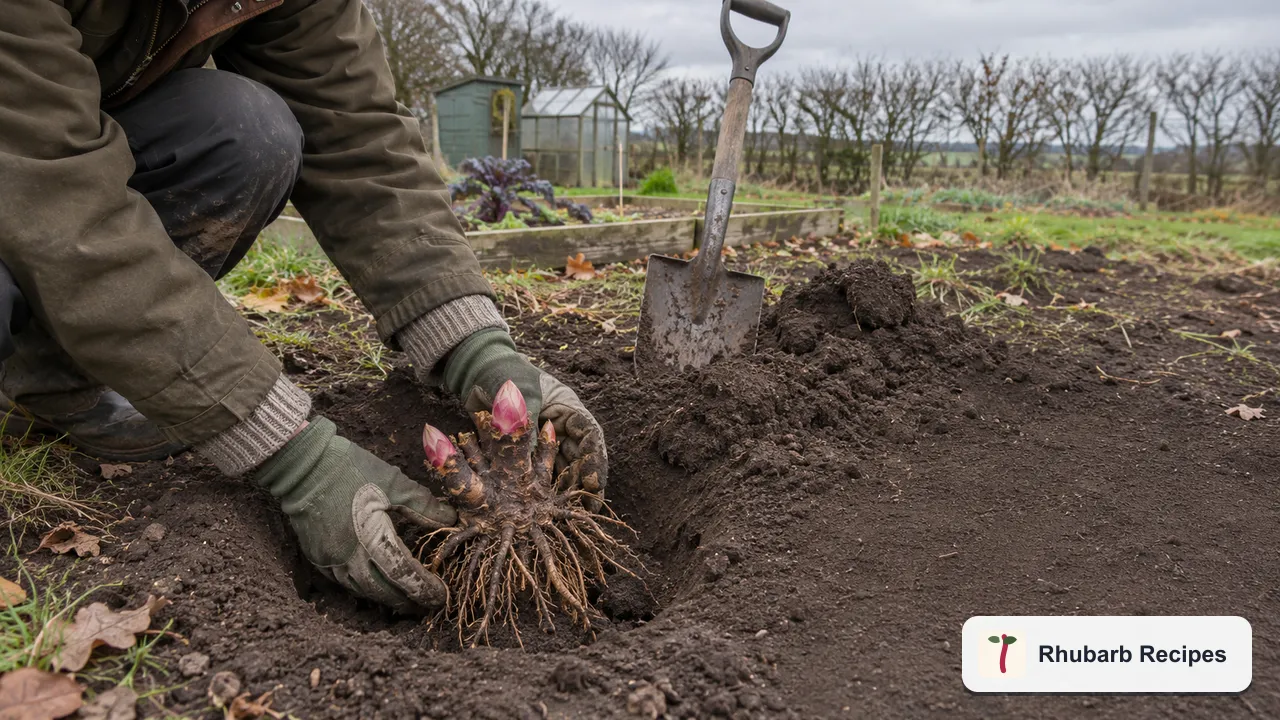
November to March is the season for bare-root rhubarb crowns, and an early variety such as ‘Timperley Early’ or a heavy cropper such as ‘Raspberry Red’ is a safe first buy. Plant the crown in an open, sunny spot with rich, well-drained soil, with the bud sitting just above the surface and 75 to 90 cm between plants. Then leave it alone for the first year.
That is all most people need. The rest of this piece is about choosing between varieties, preparing the ground, and the small decisions that make the difference between a crown that sulks and one that feeds you for a decade.
Why winter is planting time
The RHS guide to growing rhubarb says bare-root crowns are generally available from November to March and should be planted soon after they arrive. A dormant crown has no leaves to support, so it can put its energy into new roots while the soil is cool and moist. By the time it wakes in spring it is already anchored.
Container-grown plants from a garden centre can go in at any time of year, though the RHS suggests spring or autumn are best and very hot, dry weather should be avoided. Bare-root crowns are usually cheaper, and mail-order nurseries dispatch them from late autumn.
The varieties worth knowing
The RHS lists several recommended varieties. Three carry the Award of Garden Merit (AGM), which means they have been trialled and found reliable in UK conditions:
- ‘Timperley Early’ AGM. An early variety with plenty of thick red stems. The RHS describes it as ideal for forcing, which makes it the obvious pick if you want pink stalks in late winter.
- ‘Raspberry Red’ AGM. Sweet, bright red stems and a heavy crop. A good choice if you mostly make puddings and want colour.
- ‘Fulton’s Strawberry Surprise’ AGM. Bright red stems with a good, balanced flavour.
- ‘Victoria’. An old, dependable variety with greenish stems flushed red. Not an AGM plant, but widely grown and very forgiving.
Colour is a matter of variety, not ripeness. Green-stemmed rhubarb can be every bit as good in a jam or a crumble; it just looks less dramatic in the bowl. If you have room for two crowns, an early one and a later one stretch the season by a few weeks.
Choosing the spot
Rhubarb is a long-term resident. A healthy crown can stay in one place for years, so it is worth thinking about where it will live before you dig.
- Light. An open position in sun suits it best. It tolerates a little shade but crops less.
- Drainage. This is the big one. Crowns sitting in cold, waterlogged soil over winter are prone to rot. If your ground holds water, raise the bed or plant on a slight mound.
- Space. The RHS spacing is 75 to 90 cm apart. A mature plant has huge leaves, so do not squeeze it next to a path or the shed door.
- Frost pockets. The bottom of a slope or a hollow where cold air collects will catch late frosts and damage the first shoots.
Preparing the ground
Rhubarb is hungry. Dig a generous hole, wider than the root, and work in plenty of well-rotted manure or garden compost. Remove perennial weeds such as couch grass and bindweed carefully at this stage; once the rhubarb is established, getting their roots out from among its crowns is miserable work.
If the soil is frozen or sodden when the crown arrives, do not force it in. Keep the crown cool and its roots damp, wrapped in moist newspaper or sacking in a shed, and plant as soon as conditions improve.
Planting depth
The RHS advice is to set the crown so its tip, the point where the leaves emerge, sits just above the soil surface. Planted too deep, the buds can rot; too shallow, the crown dries out and heaves in frost.
Firm the soil gently around the roots with your hands rather than your boot, water it in if the ground is dry, and mark the spot with a cane. In January, when everything is brown, it is very easy to forget where you put it.
Mulch, but keep it off the bud
A layer of organic mulch around a new crown holds moisture and suppresses weeds. The RHS page on mulching suggests at least 5 cm and ideally 7.5 cm, applied over moist rather than frozen soil. With rhubarb, leave a clear ring around the bud itself so it does not sit under a wet blanket.
The first year: patience
Do not pull any stalks in the first season after planting. The leaves are feeding the crown, and every stalk you take now is a stalk you lose later. In the second year you can take a few. From the third year onwards you can pick properly through spring. Our longer piece on growing rhubarb from a crown covers that first season in more detail, and our picking calendar sets out when to start and stop in later years.
Buying tips
A good bare-root crown is firm, with at least one fat, healthy bud and no soft or dark patches. Reject anything that smells musty or has a sunken, rotten centre. If a friend is dividing an old clump, a well-chosen piece from the outer edge is just as good as a nursery crown, and free.
Plant one this winter and you will be making crumble in two springs’ time, and every spring after that for years.