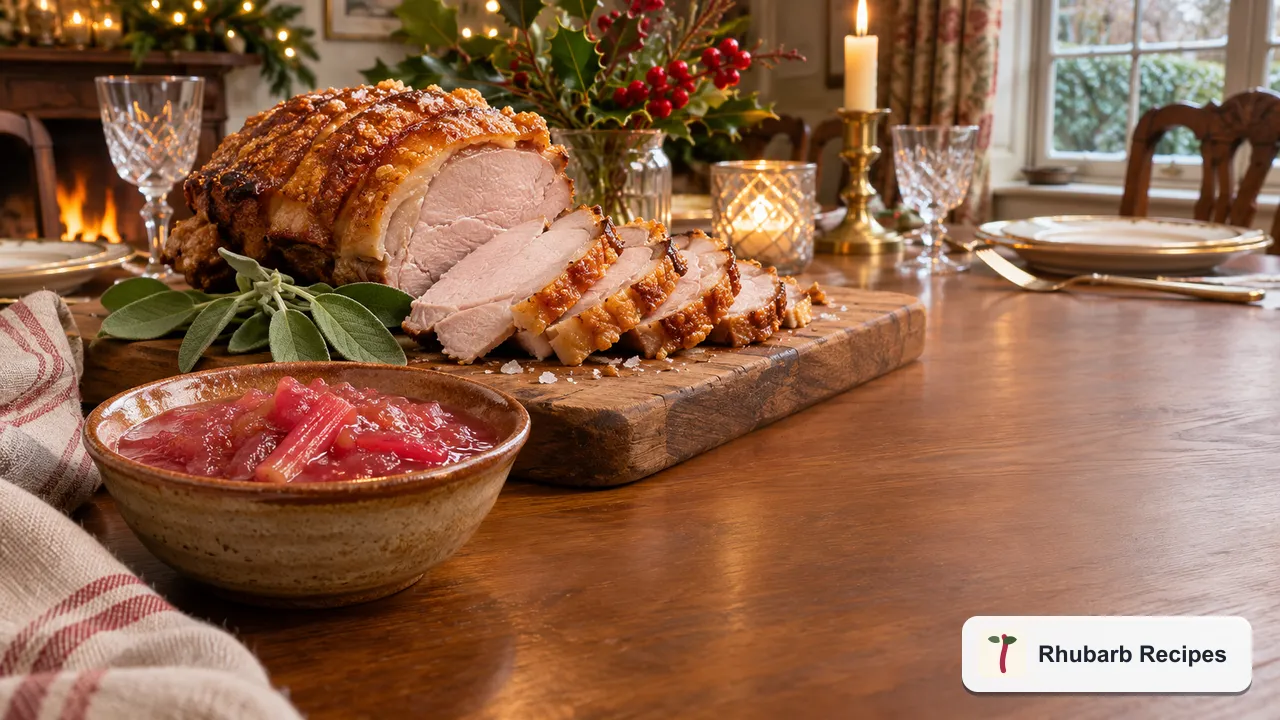
Rhubarb makes an excellent sauce for rich roast meat. Cook 400 g of rhubarb (frozen is fine) with 60 to 80 g of sugar, a little grated ginger, orange zest and a splash of the meat’s own juices or stock for about ten minutes, until it collapses. Season with salt and a grind of black pepper. It does the same job as apple sauce with pork or cranberry with turkey, cutting through fat, but with a brighter, sharper edge. It can be made up to three days ahead, or frozen for weeks.
If you are cooking goose or duck for Christmas, or a rolled pork belly for Boxing Day, this is the sauce we would put on the table.
Why rhubarb and fatty meat work
Duck, goose and pork belly all carry a lot of fat. On the plate, that richness wants something sour to balance it. Apple sauce, cranberry sauce and redcurrant jelly all exist for this reason. Rhubarb is more acidic than any of them, so a smaller spoonful goes further, and it stays sharp even when sweetened. In much of Northern Europe rhubarb with meat is perfectly ordinary; in Britain it tends to get pushed into the pudding course, which is a shame.
A sauce also solves the November problem of having bags of frozen rhubarb and a crumble fatigue. If you pulled a good crop in spring (our picking calendar covers the timing) and froze some, as suggested in our guide to freezing rhubarb, this is a good way to use it.
Rhubarb sauce for roast meat
Serves 6 to 8 as a condiment · prep 5 min · cook 10 to 15 min
- 400 g rhubarb, cut into 2 cm lengths (fresh or frozen)
- 60 to 80 g light brown or caster sugar
- Finely grated zest of 1 orange, plus 2 tbsp of its juice
- A 2 cm piece of root ginger, finely grated
- 3 tbsp chicken or vegetable stock, or juices from the roasting tin
- A small knob of butter
- Salt and freshly ground black pepper
- Put everything except the butter and seasoning in a small pan over a medium heat.
- Bring to a simmer, stirring now and then, and cook for 8 to 12 minutes until the rhubarb has completely broken down. Frozen rhubarb may take a few minutes longer.
- Beat with a wooden spoon for a rough, rustic sauce, or blend briefly with a stick blender for a smooth one.
- Stir in the butter and season with a good pinch of salt and plenty of pepper. Taste: it should be sharp enough to make you notice, with a background sweetness. Add a little more sugar if it is too fierce.
- Serve warm or at room temperature.
Matching it to the meat
Roast pork. Keep it simple. Swap the ginger for a few chopped sage leaves added at the end, and serve the sauce warm alongside the crackling.
Duck. Duck can stand something more aromatic. Add a star anise and a pinch of five-spice to the pan, removing the star anise before serving, and use a spoonful of the duck fat instead of butter.
Goose. The richest of the three, so the sauce should be the sharpest. Use the lower amount of sugar, add a splash of red wine vinegar, and a few crushed juniper berries. A spoonful of the goose roasting juices stirred in at the end ties it together.
Gammon and cold ham. A thicker version works as a glaze or relish. Cook it down for an extra five minutes until jammy, then add a teaspoon of English mustard. If you want something that keeps for months, our rhubarb chutney is a better choice, or a jar of rhubarb and ginger jam warmed with a splash of vinegar.
Oily fish is the other classic partner. Mackerel with rhubarb is old-fashioned British cooking at its best; make the plain version with a little less sugar.
Colour, and how to keep it
The colour of the sauce depends on the colour of the stalks. Red-stemmed varieties such as ‘Raspberry Red’, which the RHS describes as having sweet, bright red stems, give a clear pink sauce. Greener stalks give something closer to khaki, which tastes just as good but looks less festive.
If your frozen rhubarb is mostly green, a few tricks help: add a handful of frozen raspberries or a tablespoon of cranberries to the pan, or a small slice of cooked beetroot blended in at the end. None of them changes the flavour much.
Avoid long cooking. Rhubarb sauce turns brown if it is simmered for too long or kept warm on the hob for an hour. Make it, then reheat gently just before serving.
Making it ahead
On Christmas Day the hob is the most crowded place in the house, so get this out of the way early.
- In the fridge. Cool the sauce, cover and refrigerate. It keeps well for up to three days. The FSA’s guide to chilling, freezing and defrosting food recommends a fridge between 0 and 5 °C.
- In the freezer. Freeze in a small tub. Defrost in the fridge overnight, as the FSA advises, and use within 24 hours once thawed.
- Reheating. Warm it gently in a small pan with a splash of water, or serve at room temperature. The FSA notes that cooked food you refreeze should only be reheated once after that, so make a batch in portion-sized tubs.
If you are using tin juices, add those when you reheat rather than when you first make the sauce, so they are fresh from the roast.
Leftovers
Any sauce left after the big meal is excellent in a cold-meat sandwich with sharp Cheddar, stirred through a pan of red cabbage, or spooned over a bowl of thick yoghurt with granola for a sharp breakfast. A spoonful also lifts a gravy that tastes flat.
It is a small thing on a crowded table, but a bowl of pink rhubarb sauce next to the roast is often what people remember. And it takes less time than peeling the sprouts.