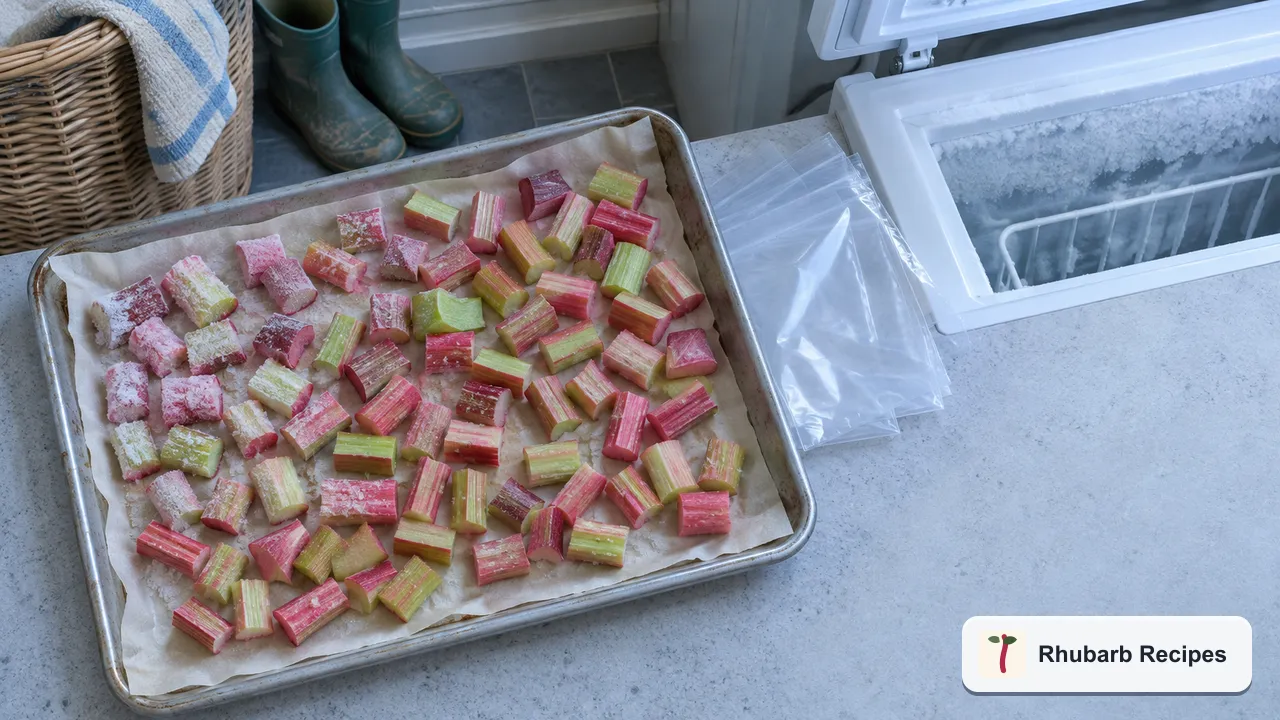
Rhubarb freezes very well. Wash and dry the stalks, cut them into 2 to 3 cm pieces, spread them on a lined tray and freeze until hard, then tip them into bags. There is no need to blanch and no need to add sugar. Label the bags with the date and weight, keep the freezer at around -18 °C, and use the fruit within three to four months for the best flavour and texture. Most cooked dishes can take it straight from frozen.
That simple method is what we use for nearly all our spring surplus. Below are the details that make a difference, plus how to freeze cooked rhubarb and which recipes are happy with frozen fruit.
Why open-freeze first
If you put freshly cut rhubarb straight into a bag and into the freezer, the pieces freeze together into a solid brick. You then have to defrost the whole lot to use any of it. Spreading the pieces on a tray lined with baking parchment and freezing them for a couple of hours first means each piece freezes separately. Once they are hard, bag them up; they stay loose, and you can shake out exactly 300 g for a crumble and put the rest back.
Make sure the pieces are dry before they go on the tray. Water left on the surface turns to ice crystals and makes the pieces stick to each other and to the parchment.
Label everything
The Food Standards Agency’s guidance on how to chill, freeze and defrost food safely recommends labelling everything you freeze so you do not end up with unidentified frozen objects. For rhubarb, three things are worth writing on the bag: the date, the weight, and whether it is raw, sweetened or cooked. Weighing as you bag saves a lot of guessing later, because frozen rhubarb is hard to measure.
How long it keeps
Frozen food at a steady -18 °C stays safe for a long time, but quality slowly declines. The FSA guidance says fruit and vegetables are usually best eaten within three to four months. Rhubarb frozen at the height of the maincrop in May is therefore at its best through to late summer or early autumn. It is still perfectly usable after that, especially in cooked dishes, though the texture becomes softer and the colour can dull.
Keep the bags well sealed and squeeze out as much air as you can. Freezer burn, the dry, pale patches you sometimes see, is harmless but leaves the fruit stringy and tasteless.
Freezing cooked rhubarb
Compote, purée and stewed rhubarb also freeze well and are handy for quick puddings and breakfasts.
- Compote. Cook rhubarb gently with sugar to taste and a splash of orange juice until just soft. Cool completely, then freeze in small tubs. The FSA advises letting hot dishes cool before they go in the freezer.
- Purée. Cook until completely broken down, blend and freeze in ice-cube trays. A couple of cubes stirred into yoghurt or porridge is a fine winter breakfast.
- Roasted rhubarb. Roasted pieces hold their shape better than stewed, and freeze nicely in syrup.
Cooking straight from frozen
For anything that is going to be cooked until soft, there is no need to thaw first. Frozen rhubarb releases more liquid than fresh, because freezing breaks down its cell walls, so a few small adjustments help:
- Crumble. Use the fruit from frozen and toss it with the sugar and a level tablespoon of cornflour or plain flour to absorb the extra juice. Add 5 to 10 minutes to the baking time. Our crumble recipe works well this way.
- Jam and chutney. Ideal for frozen fruit, since everything breaks down anyway. Add it to the pan frozen and allow a little longer to come to the boil.
- Compote and sauces. Straight into the pan. They are ready in roughly the same time as with fresh stalks.
- Cakes. For a cake where the fruit sits on top or is folded through, such as our rhubarb and ginger loaf, use the pieces frozen and pat off any frost first. Thawed rhubarb would turn the batter pink and soggy.
When you do need to thaw
A few dishes want thawed fruit: a fool made with raw purée, a quick no-cook pudding, or a recipe that needs you to slice the fruit thinly. The FSA advice is to defrost food in the fridge so that it does not get too warm, and to use it within 24 hours once thawed. Put the rhubarb in a bowl to catch the juice, which is full of flavour and worth adding to whatever you are making.
Thawed rhubarb will be limp. That is expected, and it has no effect on flavour.
Refreezing
Raw rhubarb that has been fully thawed is best cooked rather than refrozen as it is. Once cooked, the FSA says you can freeze it again, but you should only reheat it once after that. Cooking a big batch of thawed fruit into compote and freezing that in portions is a sensible way to use up a bag that defrosted by accident.
Forced rhubarb in the freezer
The pale forced stalks of late winter freeze too, but they are more delicate than maincrop. They lose their texture faster and are best used within a couple of months. If you buy a big bundle in February, freeze the surplus as gently cooked compote rather than raw pieces; it keeps its colour much better that way.
Planning ahead for next season
If you grow your own, the RHS growing guide is a useful companion, and the time to fill the freezer is at the peak of the maincrop in May and early June, before you stop pulling in late June. Our picking calendar sets out that window. A single healthy crown can easily fill several bags, enough for a pudding every couple of weeks through autumn and into the depths of winter, when pink fruit is most welcome.