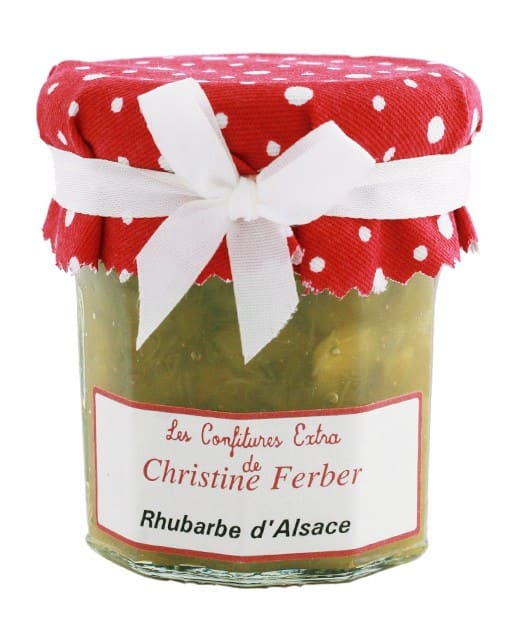

Rhubarb has almost no pectin of its own, which is why a stiff rhubarb jam always tastes a bit tired. This recipe goes the other way: a soft, pourable preserve, a touch more compote than jam, with a sharp hit of fresh ginger. It keeps its pink colour because it cooks quickly and only once.
Rhubarb and ginger jam
Makes 4 to 5 standard 227 g jars · prep 20 min · cook 25 min
- 1 kg trimmed rhubarb, cut into 2 cm lengths
- 800 g granulated sugar (not jam sugar)
- Juice and zest of 2 lemons
- 50 g fresh root ginger, peeled and finely grated
- 3 balls of stem ginger in syrup, chopped (optional)
- Combine the rhubarb, sugar, lemon zest and lemon juice in a wide, heavy pan. Stir, cover and leave for at least two hours, or overnight in a cold corner. The sugar will draw a pink syrup out of the fruit.
- Place three small saucers in the freezer. Sterilise four or five 227 g jars (a hot oven at 140 °C fan for 15 minutes with the lids sitting apart).
- Set the pan over a medium heat. Stir until the sugar has fully dissolved; this is important, because any grains left at this stage will crystallise later. Add the grated and stem ginger.
- Bring to a rolling boil. Boil hard for 12 to 18 minutes, skimming any foam.
- Start testing the set after 12 minutes. Put a spoonful on a cold saucer, wait 30 seconds, then push with your fingertip. A soft wrinkle is what you are after. Not a dry skin.
- Off the heat, leave the jam to settle for 5 minutes before potting; this keeps the fruit suspended rather than floating. Pot into hot jars, lid at once.
Why a loose set, not a stiff one
With enough sugar and long enough cooking, you can push rhubarb to a wobble-on-a-spoon jam. But the colour turns brown, the fresh flavour cooks off, and the ginger loses its lift. A soft set keeps the preserve bright pink and pourable; it is better for folding into yoghurt, for spooning over the rhubarb ginger loaf, and for slicing into toast rather than scraping.
If you insist on a firm jam: add half a pack of pectin with the sugar and boil for a minute or two longer after it is dissolved. The colour will still darken.
Lemon is the acid, not the flavour
Rhubarb and ginger want tartness to lift them. Lemon juice provides it, and along with the acid it adds a trace of pectin from the pith. Two whole lemons, pith scrubbed, is more than most recipes use and worth the extra ounce.
Oranges can go in with the lemon; they soften the flavour and the set, and are a happy change for a jar or two from a second batch.
How I test for a set, honestly
Thermometers lie slightly on preserves, because the sugar concentration climbs faster at the edges of the pan than in the middle. The old cold-saucer trick is more reliable. Drop a teaspoon on the saucer, wait, and push. If you see a sharp wrinkle like the skin on cold custard, the jam is at a full set. If you see a soft bulge that moves slowly, you have a loose set, which is what we want. If the drop is still a puddle, give it two more minutes and test again.
Storage and shelf life
Unopened and in cool darkness, a properly potted rhubarb jam keeps for at least a year without issue. Because it is a soft set with a lower sugar ratio than a traditional 1:1 jam, I would open and refrigerate it within eight to ten months for the brightest flavour. Once opened, it keeps for six weeks in the fridge; do not keep it in a warm kitchen cupboard once the seal is broken.
If you see fuzzy mould under the lid later on, the whole jar goes to the bin; do not scoop off the top and continue. If the surface sugar has crystallised but the jam under it is fine, scrape the crust off and use the rest first.
Variations I keep making
- Rhubarb and Earl Grey. Steep two teabags in the lemon juice while the fruit macerates. Fish them out before boiling. A floral background that works at the breakfast table.
- Rhubarb and vanilla. Split a pod into the pan at the start. No ginger. Gentler.
- Rhubarb, rosewater and cardamom. Three crushed pods and a teaspoon of rosewater off the heat. Slightly Persian in character, very good on sheep’s-milk yoghurt.
The rhubarb you use matters. Early forced rhubarb gives a paler, sweeter jam; maincrop is sharper and a deeper pink. If you want advice on which stalks to pick, and when, read our guide to the UK rhubarb year.