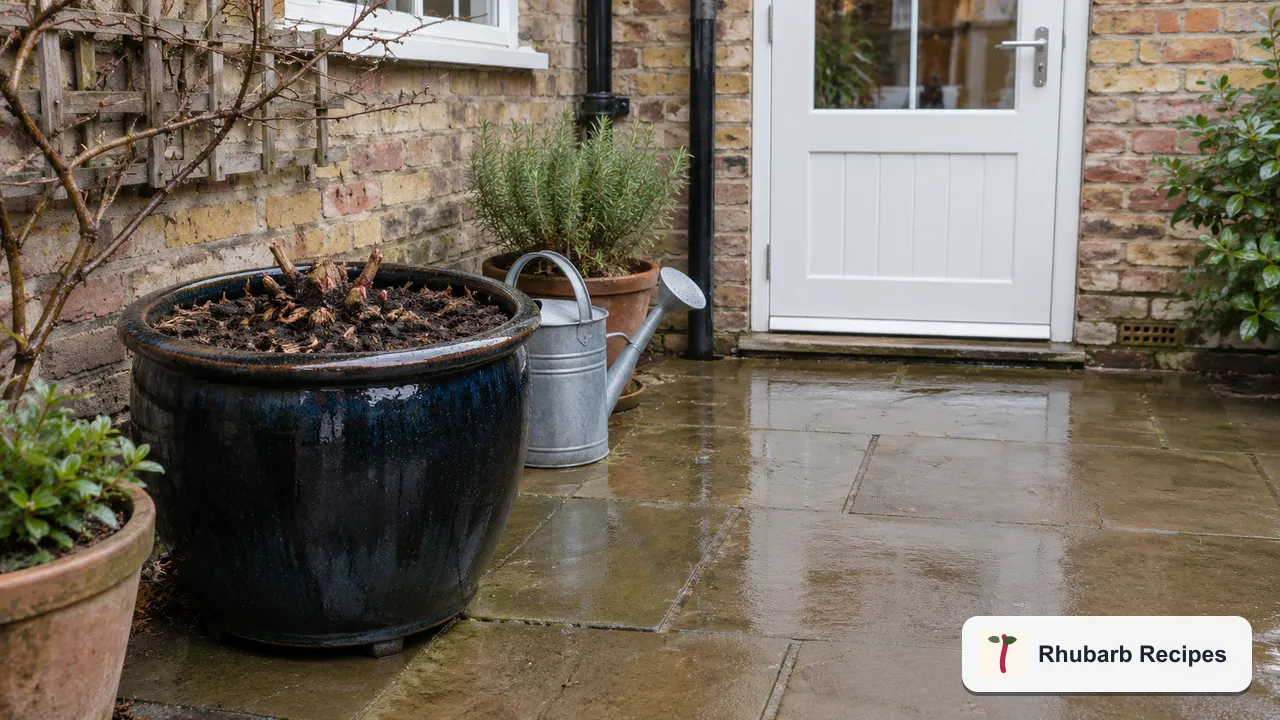
Yes, you can grow rhubarb in a pot, and it works well on a patio, terrace or large balcony. The container needs to be at least 50 cm deep and 50 cm wide, with plenty of drainage holes, filled with a peat-free, soil-based compost. Choose a compact variety, plant the crown with its bud just above the surface, and water regularly, keeping the compost moist but never waterlogged. Expect a smaller crop than a plant in open ground, and plan to repot or replace it after a few years.
That sizing comes from the RHS guide to growing rhubarb, and it matters more than any other detail. Rhubarb has a big, deep root system; squeeze it into a small pot and it will survive, but it will not crop.
Picking a container
Think in terms of a half-barrel rather than a flowerpot. A container 50 cm across and deep holds a lot of compost, which is what you want: more compost means more water and nutrients held in reserve, and steadier temperatures for the roots.
- Material. Glazed ceramic, thick plastic, wood and galvanised metal all work. Unglazed terracotta looks lovely but dries out fast in summer and can crack in a hard frost.
- Drainage. Several holes, not one. Raise the pot on feet or a couple of bricks so water can drain away freely in winter.
- Weight. A full pot this size is very heavy. Put it where it is going to live before you fill it. On a balcony, check what load the structure can safely take before adding a large container of wet compost.
Compost and planting
The RHS recommends a peat-free, soil-based compost. Soil-based mixes hold nutrients longer and give the pot weight and stability; soilless multipurpose compost tends to shrink and dry out over a year or two.
Put a few crocks or some coarse grit over the drainage holes, fill the pot to about two-thirds, set the crown in place, and fill around it. As in the ground, the bud should sit just above the surface of the compost. Firm gently and water in.
A bare-root crown can go into a pot any time from November to March. A container-grown plant from a garden centre can be moved into its new home at most times of year, avoiding hot, dry spells. Our guide to growing rhubarb from a crown covers the first season after planting. For more on choosing a crown, see our note on planting rhubarb crowns this winter.
Which variety for a pot
The RHS advises choosing a compact variety for containers. Ask the nursery which of their crowns stay smallest; it varies by supplier. Older, very vigorous types will outgrow a pot quickly and are better saved for an allotment. If you want early stalks, an early variety will give you pink stems by the back door weeks before anything else in a small garden is ready.
Watering: the main job
A rhubarb leaf is enormous, and on a warm spring day it loses a lot of water. In a pot there is only so much compost to draw from, so watering is the difference between thick stalks and thin ones.
- From the first leaves in spring to late summer, check the compost every couple of days and water when the top few centimetres feel dry.
- Water thoroughly so it runs out of the base, rather than a little often.
- In winter, water only if the compost is bone dry, which is rare outdoors in the UK. The bigger risk then is too much water, not too little.
A layer of mulch on the surface of the pot helps a lot. The RHS’s mulching advice notes that a thick layer reduces evaporation and suppresses weeds. On a pot, a few centimetres of garden compost or well-rotted manure in spring does both jobs. Keep it clear of the crown.
Feeding
In the ground, rhubarb roots range widely to find food. In a pot they cannot. Top-dress each spring by scraping off the top few centimetres of old compost and replacing it with fresh compost or well-rotted manure. During the growing season a general-purpose liquid feed every few weeks keeps the leaves green and the stalks coming.
Winter in a pot
Rhubarb needs a cold winter to crop well, and a pot left outside will get one. Two things to watch:
- Waterlogging. A pot standing in a saucer of water all winter will rot the crown. Remove saucers in autumn and keep the pot on feet.
- Prolonged hard frost. Roots in a pot are more exposed than roots in the ground. In a long, severe freeze, move the pot against a house wall or wrap it in hessian or bubble wrap. Leave the top uncovered.
How much will you get
Honestly, less than from a plant in the ground. A healthy potted crown in its third year should give you enough for several crumbles and a batch of compote over the spring. Do not pick at all in the first year after planting, take a little in the second, and pick more freely from the third, stopping by the end of June as you would with any rhubarb; our picking calendar has the details.
Forcing a potted crown is possible but hard on it. If you want to try, cover it with an upturned bucket in midwinter and accept that it will need a full year to recover.
Repotting and renewing
After three or four years a potted rhubarb usually fills its container with root and starts to produce thinner stalks. That is the signal to tip it out in winter, split it as you would a clump in the ground, and replant the best piece in fresh compost. The rest can go to friends or onto an allotment.
With a decent pot, steady watering and a top-dressing each spring, a small paved garden can supply fresh rhubarb every year.