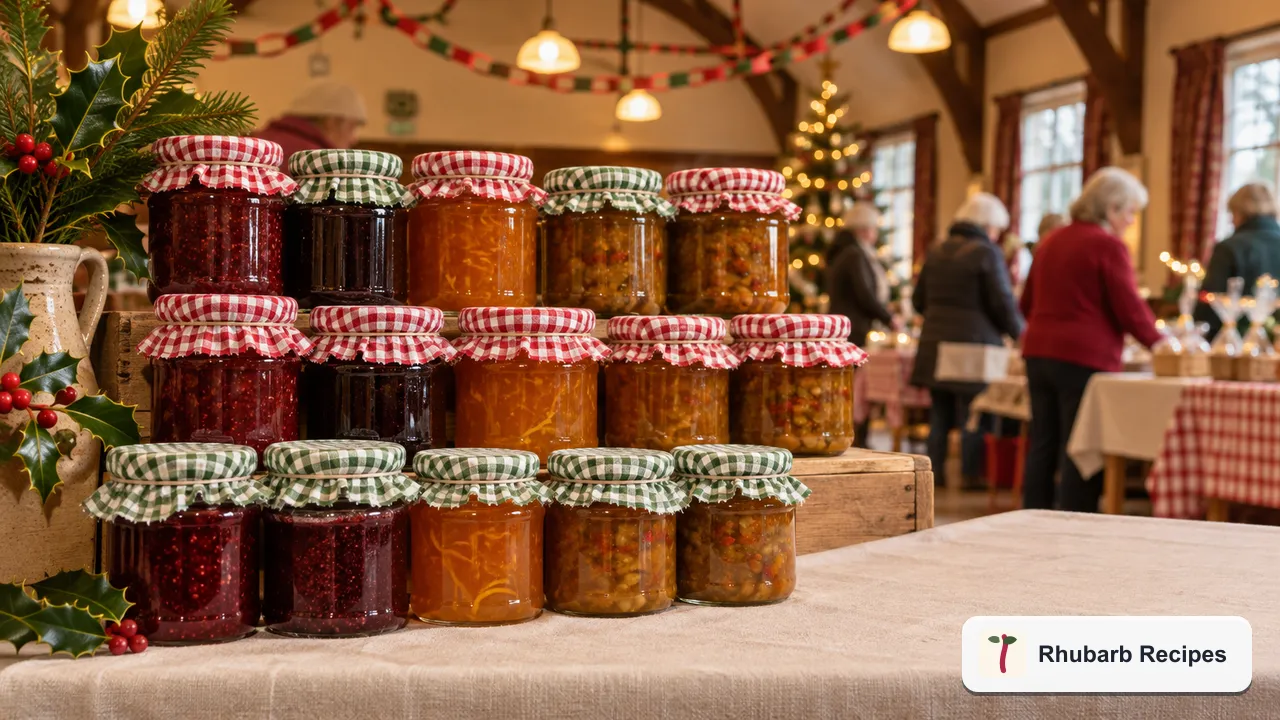
If you are selling a few jars of rhubarb jam at a one-off charity or school Christmas fair, you probably do not need to register as a food business, and you do not need a food hygiene certificate. If you sell regularly, at markets most weekends or online, you will usually need to register with your local council at least 28 days before you start. Either way, the jam must be safe, and you should be ready to tell buyers what is in it.
That is the summary. The detail below comes from the Food Standards Agency’s guidance and the GOV.UK registration page, read in November 2026. It is general information for home cooks; your council’s food safety team has the final word on your situation.
Do you need to register?
The FSA’s guidance on providing food at community and charity events says that people who provide food at such events may be considered a food business and may need to register with their local authority. It also says the local authority may decide registration is not needed where the activity is very limited and infrequent.
There are no fixed numbers in the guidance, no ‘up to five events a year’ rule. In practice the question is how often and how much. A table at the church Christmas fair once a year sits at one end. A weekly farmers’ market stall sits at the other.
For anything regular, the GOV.UK page on food business registration is clear that you must register with your local authority at least 28 days before trading, and that this includes businesses trading from home. It applies in England, Wales and Northern Ireland; Scotland has its own arrangements through local councils.
If you are in two minds, ring or email the council. A short conversation now costs nothing. Some fair organisers also ask stallholders whether they are registered, so check the booking terms.
Hygiene certificates
The same FSA guidance states plainly that you do not need a food hygiene certificate to make and sell food for charity events. You do still need to handle food safely. For jam, that mostly means clean hands, a clean kitchen, sound jars and keeping pets off the worktops while you cook.
If you go on to sell regularly, a basic food hygiene course is a sensible investment even where it is not strictly required, and your council may recommend one when you register.
Allergens and ingredients
This is the part people most often get wrong at Christmas fairs, and it matters most to buyers. Under the FSA guidance, allergen labelling law applies to registered food businesses. If you are not registered, you are not legally required to give allergen information, but the FSA encourages you to provide it where you can.
A plain rhubarb jam is simple: rhubarb, sugar, perhaps lemon. Once you start adding things it gets more involved. A rhubarb and ginger jam is still straightforward, but a rhubarb and almond conserve contains a tree nut, and some chutneys use mustard seeds or celery. Check each ingredient against the FSA list of 14 allergens. A chutney thickened with a little flour may contain gluten.
Whatever your status, our advice is the same: keep a written ingredients list for every batch and put it on the label, with any allergens in bold. Someone with an allergy can then decide for themselves.
What to put on the label
For prepacked food sold by a food business, the FSA guidance says the label must show the name of the food and a full ingredients list with the 14 mandated allergens emphasised. Even if you are a once-a-year charity seller, using that format is good manners and covers you. A clear, simple label might read:
The ‘home kitchen’ line is not a legal phrase, just honest information for anyone with a serious allergy.
Reusing jam jars
Everyone who makes jam has a cupboard of old jars. The FSA says it is safe to re-use glass jam jars occasionally if they are properly washed, free from chips and cracks, and sterilised before each use. It adds that the regulations on food contact materials, which may limit the re-use of jars, apply to businesses.
So for an occasional charity table, washed and sterilised old jars are fine. If you are registering as a business, buy new jars and lids from a packaging supplier. They are not expensive in bulk, the lids seal reliably, and the whole stall looks tidier.
Make jam that keeps
A jar sold in December may not be opened until March. That is not a problem for a proper full-sugar jam, but it can be for low-sugar versions, which do not keep as well once opened. If you sell a reduced-sugar jam, say so on the label and add ‘keep refrigerated after opening’.
Our own rhubarb and ginger jam is a loose, soft set, which suits home use. For a stall where jars will be tipped about in bags, cook it a few minutes longer for a firmer set so it does not leak if a lid works loose.
A checklist for fair day
- Labels with the name, ingredients, allergens in bold and the month made.
- A printed ingredients sheet on the table for anything without a full label.
- Lids checked and tightened; no sticky jars.
- Prices clearly marked, and a float if you take cash.
- A cloth for spills, and a box to carry home what does not sell.
If your stall also has cake, the same thinking about ingredients applies. Our rhubarb and ginger loaf keeps well for a week, which makes it a sensible bake to prepare a day or two ahead; just write the allergens (wheat, eggs, milk) on a card beside it.
When to stop and ask
If you are planning to sell through a shop, take orders online, post jars to customers or trade at more than a handful of events, you are moving into proper food business territory. That brings registration, a possible inspection, and fuller labelling duties. The FSA and your council’s environmental health team are the right people to talk to before you scale up. For a few jars on a fair table in aid of the school roof, a clean kitchen and an honest label are what count.