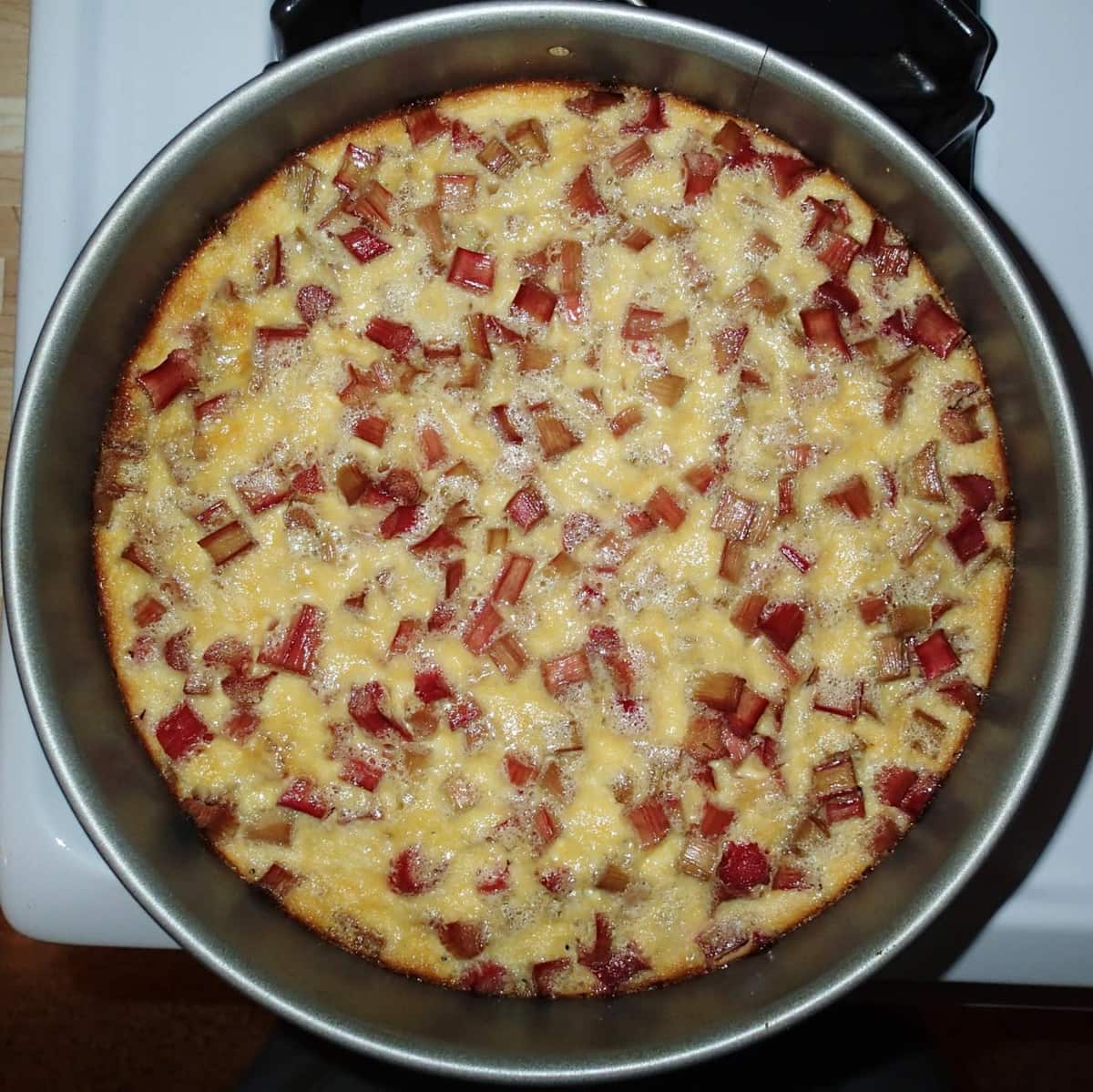

This is the cake I keep coming back to when there is half a bunch of rhubarb left after a crumble and a jam, and I want something that will see me through the week. It is somewhere between a parkin and a sticky ginger loaf, with a layer of roasted rhubarb set into the top. The fruit caramelises against the tin, so the sides of the slice are chewy and faintly jammy.
It keeps for five to seven days in a tin and is better after one.
Rhubarb and ginger loaf
Makes one 900 g loaf · prep 25 min · bake 55 to 60 min
For the roasted rhubarb
- 250 g rhubarb, trimmed, cut into 1 cm pieces
- 30 g light brown soft sugar
- A splash of orange juice
For the cake
- 130 g unsalted butter
- 120 g dark muscovado sugar
- 100 g black treacle
- 100 g golden syrup
- 200 g plain flour
- 50 g rolled oats, or wholemeal flour
- 2 tsp ground ginger
- 1 tsp bicarbonate of soda
- Half a teaspoon of mixed spice
- A pinch of fine salt
- 150 ml whole milk
- 1 large egg, beaten
- 2 balls of stem ginger in syrup, finely chopped
- Heat the oven to 180 °C fan (200 °C conventional). Tip the rhubarb into a small roasting tin with the sugar and juice; roast for 10 to 12 minutes, until the fruit is soft but holding its shape. Drain, keeping any syrup. Drop the oven to 160 °C fan.
- Line a 900 g loaf tin (roughly 21 by 11 by 7 cm). Scatter the rhubarb across the base.
- Warm the butter, muscovado, treacle and syrup in a pan over a low heat until just melted. Take off the heat.
- In a bowl, whisk the flour, oats, ginger, bicarbonate, mixed spice and salt.
- Whisk the milk and egg into the warm butter mixture. Pour onto the dry ingredients and fold gently with a spatula until smooth. Stir through the stem ginger. The batter is loose; that is what you want.
- Pour over the rhubarb. Bake for 55 to 60 minutes, until a skewer in the centre comes out with only a damp crumb. Cool for 20 minutes in the tin, then turn out and let the cake sit upside-down on a rack to finish cooling. The rhubarb is now on top.
- If you want, brush the warm cake with the reserved rhubarb syrup. Store wrapped in paper and then in a tin.
Why roast the rhubarb first
Two reasons. Raw rhubarb thrown into a cake batter releases a lot of water as it bakes, and you end up with a wet band under the fruit. Roasting first drives off some of that water and sets the pieces so they stay distinct. It also concentrates the flavour, which is useful in a loaf where the rhubarb is competing with treacle and spice.
Roast it on the day; frozen roasted rhubarb goes to pulp in the batter.
Dark sugar matters
This is the cake where you should spend on good dark muscovado. The deep, slightly bitter flavour against the rhubarb is the point. Soft light brown works, but you lose the parkin edge. Treacle plus golden syrup is classic; two tablespoons of honey can replace the syrup, but the crumb will be lighter.
Variations worth making
- Orange and cardamom. Replace the mixed spice with the seeds from four pods, crushed. Add the zest of a whole orange to the batter. Good in autumn.
- Buttermilk version. Swap the milk for buttermilk and add a second egg. The crumb goes closer to a tea bread; not better, just different.
- Without eggs. Leave the egg out and increase the milk to 180 ml. The cake is a touch denser, still good.
What to serve with it
Slice it thickly, warm it in a low oven for five minutes and put it beside strong tea, or next to the rhubarb and ginger jam on buttered toast. With Wensleydale and a glass of dessert wine, it becomes a cheese-course pudding. It does not want cream.
Keeping and freezing
Wrapped in baking paper inside a tin, the cake keeps happily for a week on a cool shelf. It freezes well whole or in slices; wrap each slice in paper, then a bag. A frozen slice defrosts in an hour on the counter, or in ninety seconds in a low microwave if you forgot to take it out at breakfast.
For more rhubarb cakes (a sponge version, and a simple traybake) we have earlier notes in the journal.